The Board Did Not Promote You. It Simply Started Asking Different Questions.
The CPO role is no longer what it was. The leaders who recognise that early will define what it becomes.
WAR ROOM STORIES
Hemangi Tawade
4/14/20262 min read
A C-suite executive stopped me in the corridor one afternoon. Not my direct line. Not a formal meeting. He had a question: “Can you look at this procurement technology platform for us? We are considering it for procurement buying.”
I was an SAP procurement consultant. This platform was outside my certified scope. My first instinct was to say exactly that.
I didn’t.
That corridor moment was not an IT question. It was a test I didn’t recognise at the time. The executive wasn’t asking about software. He was asking whether I could think beyond my certified expertise — whether I could be trusted with a business decision, not just a system one.
This is happening to CPOs across every boardroom right now, at scale and at speed.
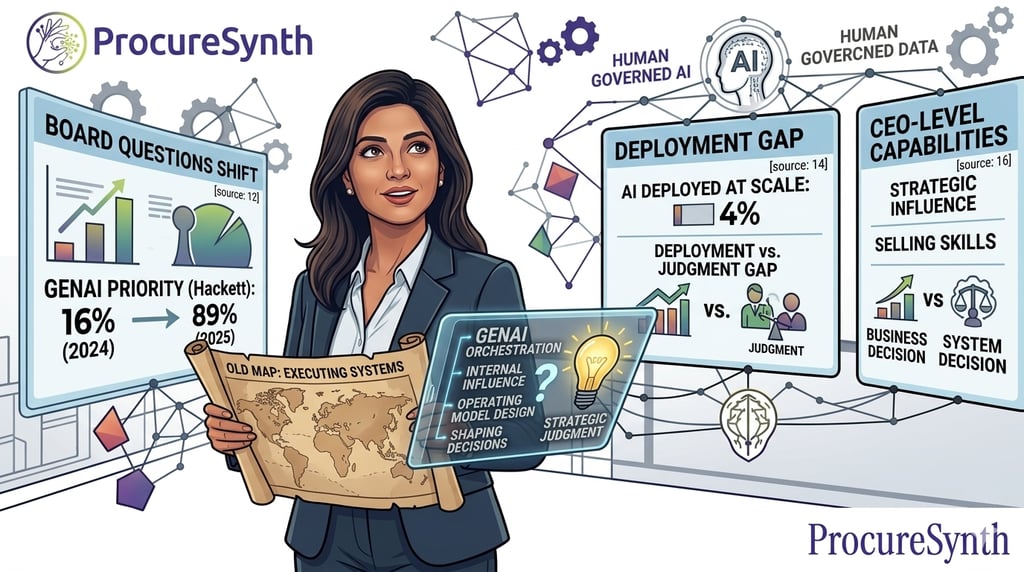
In 2024, 16% of procurement leaders prioritised GenAI. By 2025, that figure reached 89% — a 73-percentage-point shift in a single year (Hackett Group). The board’s expectations did not wait for procurement to prepare. They moved anyway.
Yet only 4% of CPOs have deployed AI at scale. The gap exists not because of technology.
It exists because CPOs are waiting for a new job description before developing new capabilities — AI orchestration, internal influence, operating model design.
"The CPO now needs characteristics that previously belonged to the CEO — selling skills, strategic influence, the ability to shape decisions rather than execute them."
— Darshan Deshmukh, President at ProcureAbility, Podcast: Art of Procurement
The role has already been redrawn. Most CPOs are still reading the old map.
I spent the following weeks learning that platform. Not deeply — I was not building an implementation. I was building an informed perspective. I delivered an analysis grounded in procurement logic, not system knowledge. That executive involved me in three more strategic decisions that year. My title had not changed. The questions directed at me had.
That is the shift every CPO faces today. AI will not make you irrelevant. Waiting for permission to govern it will. The CPOs who will own the next decade govern AI with judgment, not just deploy it with budget.
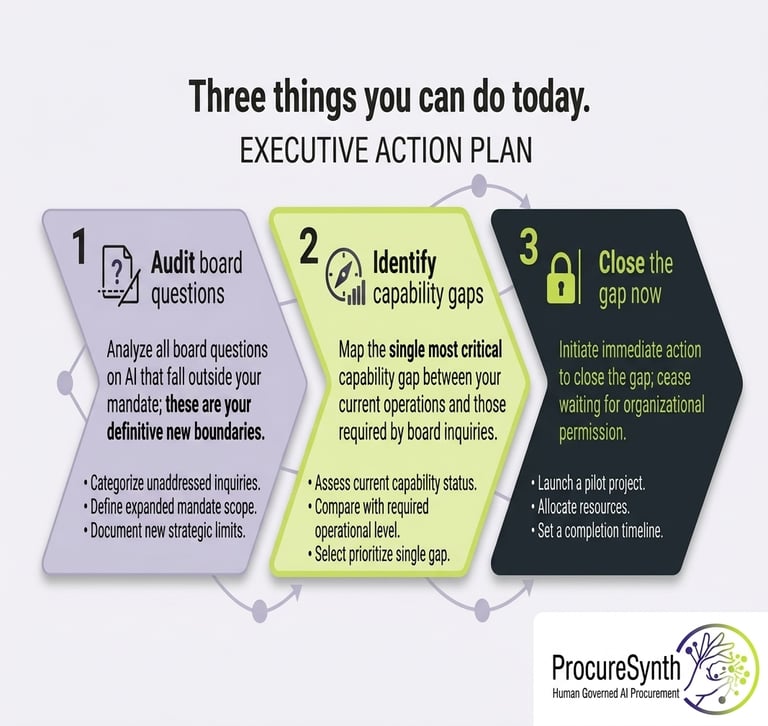
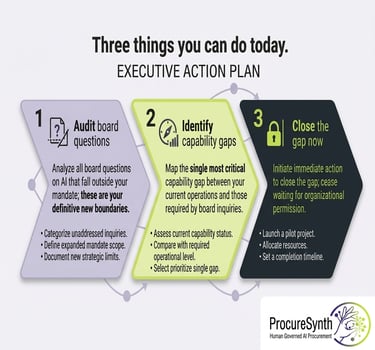
Three things you can do today. Audit the questions your board is already asking that fall outside your current mandate — those are your new boundaries. Identify one capability gap between where you operate now and where those questions require you to operate. Stop waiting for organisational permission to close it.
Sources & References
The Hackett Group — 2025 CPO Agenda: GenAI Transforms Procurement (2025). Statistic: GenAI as a procurement priority rose from 16% in 2024 to 89% in 2025.
The Hackett Group — 2025 CPO Agenda: GenAI Transforms Procurement (2025). Statistic: Only 4% of procurement organisations have achieved large-scale GenAI deployment.
Darshan Deshmukh, President, ProcureAbility — interviewed by Philip Ideson on Art of Procurement podcast. On the evolving CPO competency profile. Episode title and date to be confirmed at artofprocurement.com.
AI assistants for citations and stats check: Claude, for image generation: Gemini Nano
Foundation Assessment
Are you Ready to have This Conversation?
ProcureSynth assesses your foundation based on predefined metrics and delivers a concrete plan for resolution
Email: connect@procuresynth.com
© 2026 ProcureSynth. All Rights Reserved. ProcureSynth® is a registered trademark of Hemangi Tawade AI Transformation Services.